
Identity, Forgetting, and the Self
The Book of MirrorsThis flow explores how memory shapes personal identity through Flynn’s lost ambitions, Simmons’s amnesia, and Freeman’s fear of cognitive decline.
increasing Bearing strength in each event
 decreasing
Bearing strength in each eventdecreasingThe Young Writer’s Ambition
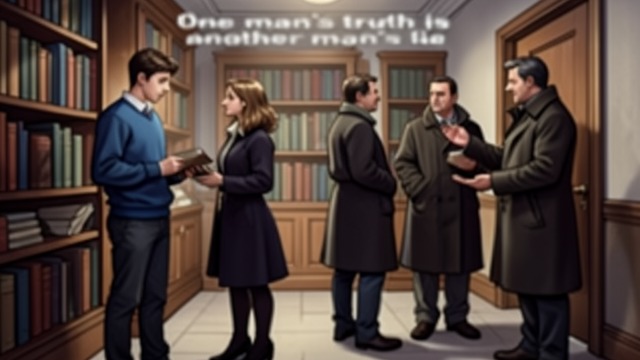
A Self Built Around a Future
The Writer’s Ideal
Richard Flynn arrives at Princeton with the hope of becoming a writer, shaping his identity around literature, observation, and the promise of a life beyond his Brooklyn upbringing. He sees himself as an outsider on campus and treats that distance as part of the temperament of a serious artist.
Loss Before the Crime
His father’s death and his mother’s move to Philadelphia unsettle his sense of home. Laura Baines becomes important partly because she enters his life at a moment when the family world he knew is disappearing. Love, literary ambition, and personal loss begin to attach themselves to the same brief period.
The later manuscript turns this young self into a remembered character, but the version on the page is shaped by decades of disappointment. Flynn’s account asks whether a person can preserve an earlier identity through memory, or whether the writer who recalls the past inevitably remakes it to explain the life that followed.
The Life That Did Not Happen
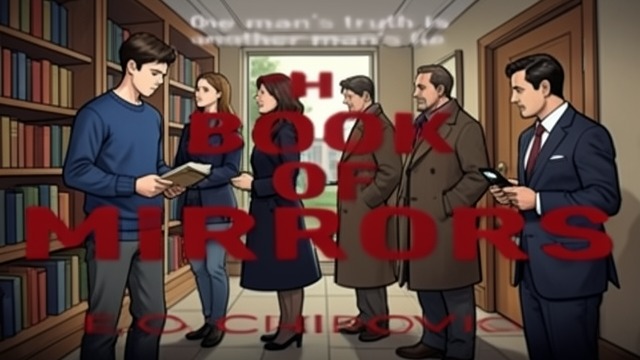
Ambition Interrupted
A Brief Public Recognition
Richard Flynn experiences a breakthrough when Signature accepts three short stories. For a moment, publication seems to confirm his chosen identity as a writer, and he and Laura Baines imagine a future in which his work might grow into a career. The success is small, but its symbolic force is immense to him.
The Collapse of Possibility
The murder, police attention, and Laura’s disappearance overtake that hopeful moment. Flynn leaves Princeton for graduate study at Cornell, is treated as a suspect, and never resumes the public literary life he had imagined. His later employment in advertising becomes, in his own telling, a grey existence shaped by what he failed to become.
The contrast makes identity appear vulnerable to chance and aftermath. Flynn does not simply lose a publishing opportunity; he adopts a life story in which the writer has been silenced by betrayal and catastrophe. That self-understanding gives his late manuscript its emotional urgency, even as it may distort the events it recounts.
Simmons as a Stranger
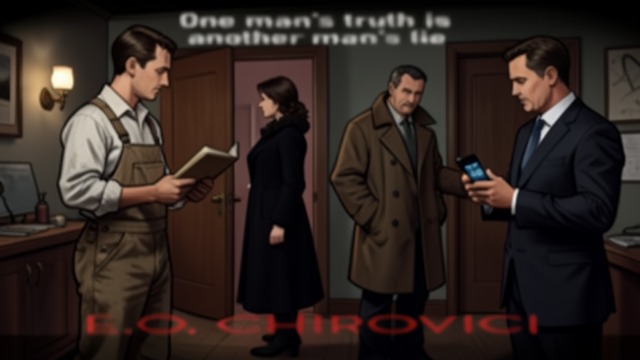
A Biography Without Ownership
The Unknown Former Self
After the hospital attack, Derek Simmons cannot remember the life that preceded it. He learns that he was a student, an electrician, a husband, and an accused murderer, but those facts resemble information about a stranger. Skills remain available even when their origins and personal associations have vanished.
An Identity Supplied by Others
Joseph Wieder helps Simmons rebuild a daily life through medication, housing, work, and supervision. Simmons accepts the professor’s account of who he is because he has no independent access to the past with which to test it. The new life is not false in every respect, but it is constructed around a radical absence.
Simmons’s condition makes identity a social as well as a psychological achievement. Other people can provide facts and care, yet they cannot guarantee that the person receiving them will experience those facts as a continuous personal history. His later recovery will reveal how fragile that arrangement is.
Freeman’s Failing Archive
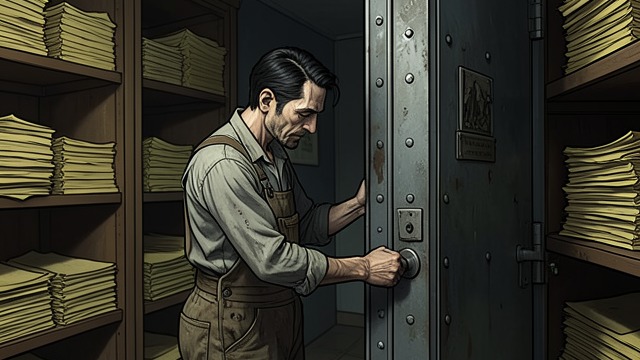
The Investigator Becomes a Witness
Cognitive Loss Approaches
Roy Freeman notices that names and street locations are slipping from his grasp. Medical tests give the change a name: Alzheimer’s disease. He understands that the condition will progress, and that within a few years he may no longer remember his work, his case, or even the identity through which he has understood his life.
Work as Resistance
Freeman chooses the Wieder case as a demanding exercise for his mind. Reading old files and comparing accounts gives him an immediate purpose, but it also forces him to face his guilt about the original investigation and his earlier drinking. The inquiry becomes a way to act before memory takes away his ability to act.
His illness does not simply add personal stakes to a detective story. It makes Freeman’s method an ethical problem: he must investigate the unreliability of other people’s memories while knowing his own will deteriorate. The case becomes both a pursuit of truth and a final attempt to make meaning while he still can.
A Chosen Last Memory

Choosing What to Keep
A Case Loses Its Hold
After confronting Derek Simmons, Roy Freeman leaves the investigation with a confession and an arrest, but he does not treat the case as the memory he most wants to preserve. His thoughts turn instead toward the approaching meeting with Diana, whose return opens the possibility of repairing a relationship damaged by his drinking and neglect.
The Meaning of a Moment
Freeman imagines a calm journey to the airport as the memory he would choose if illness allowed him only one. The choice shifts the novel’s measure of significance away from professional recognition and toward an ordinary moment of hope. He knows the memory may fade, but its value does not depend on permanence.
The ending offers no cure for forgetting. It offers an act of selection: while Freeman can still decide what matters, he chooses a future-facing moment of human connection over the violent history that has occupied him. Identity is shown not only as the sum of remembered facts, but also as the values a person continues to affirm.
Fall 1987, when Richard Flynn begins life with Laura Baines at Princeton
1987–1988, after Joseph Wieder’s murder and before Richard Flynn leaves Princeton
1983–1985, after Derek Simmons is hospitalized and loses his memory
During the investigation, after Roy Freeman learns he has Alzheimer’s disease
At the ending, during Roy Freeman’s drive to meet Diana
